
What is Dementia?
Dementia encompasses several complex, progressive conditions that impact memory, behavior, and daily functioning. It often presents in its earliest stages as a loss of short-term memory, personality changes, confusion, and impaired judgement. It is not a normal part of aging, but the risks of dementia do increase with age.
Dementia is not one specific disease, but Alzheimer’s is the most common. Alzheimer’s disease is a neurodegenerative disorder that destroys brain cells, causing cognitive decline and dementia. It destroys memory, reasoning, and behaviour, making it impossible for patients to perform daily tasks, including eating. It accounts for approximately 60% – 70% of all dementia cases.
Dementia and Alzheimer’s Home Care
With dedicated, professional care, dementia patients can remain at home, even up to the palliative care stage. We provide dedicated Alzheimer’s and dementia care for people who wish to stay at home where they’re most comfortable and in a familiar environment.
Why Home Care is Beneficial for Dementia Patients
One of the most emblematic symptoms of dementia is memory loss, particularly more recent memories. Living in a familiar environment helps reduce confusion and anxiety, creates vital emotional stability, and supports residual memory by providing recognizable cues.
Staying at home also helps maintain comfortable routines, that we at Humble Home Care, can help support. Routines provide predictability that reduces confusion, anxiety, and behavioural issues that are common issues for people with dementia.
At Humble Home Care, we’re specifically trained to work with and support people with dementia, including Alzheimer’s. Our first task in the consultation process after the initial meet and greet is to do a walk through of your home, identifying any hazards and recommending solutions that will keep your loved one safer. Dementia patients are inclined to wander, and some of the most common household modifications we recommend for dementia patients include specialized locks and cameras around the entrances to the home. This evaluation is performed by our Senior Home Safety Specialist providing a clinical-grade environmental audit, for unparalleled peace of mind.
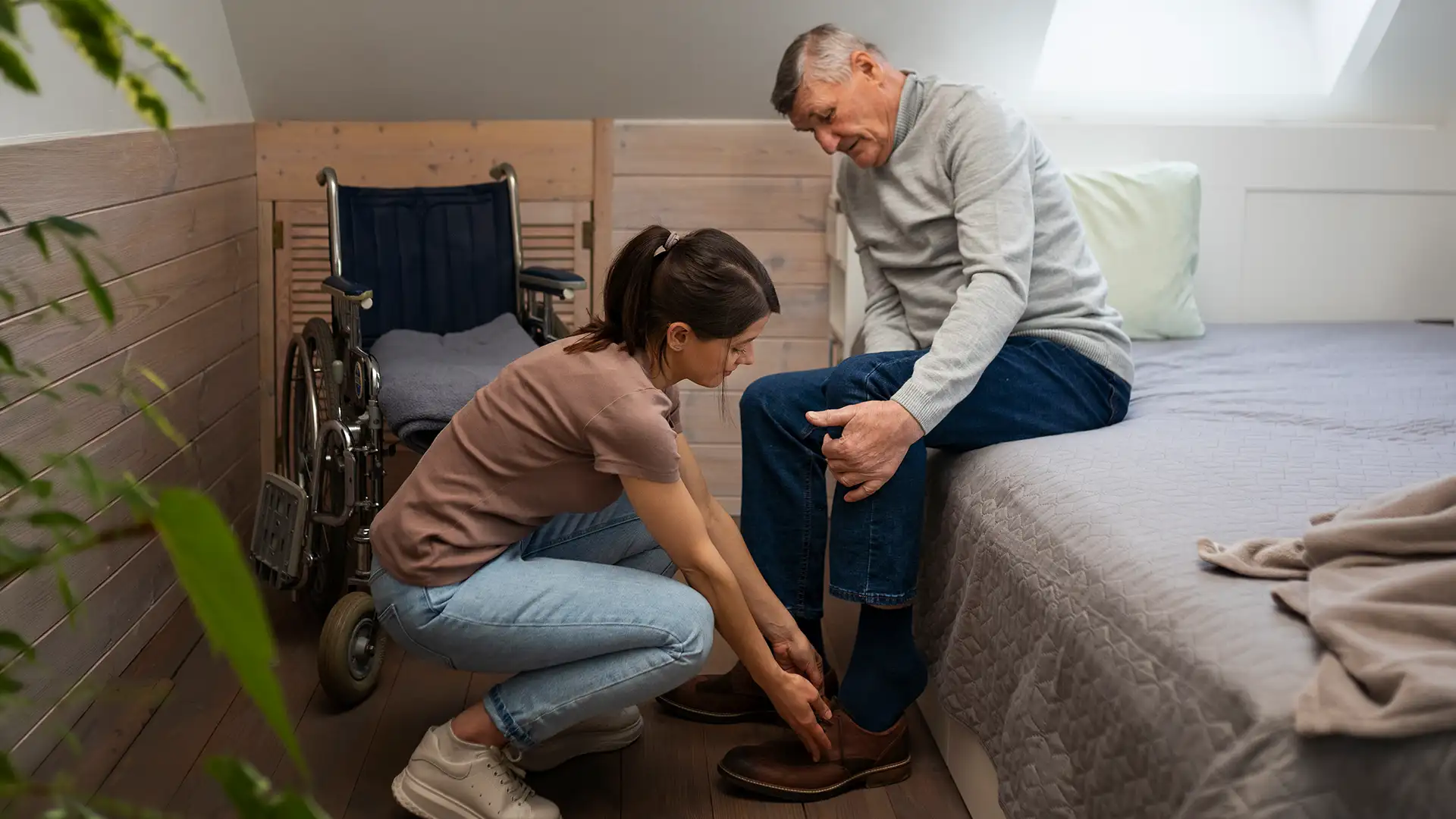
Alzheimer’s Disease & Dementia Care Plan
Our care plans are personalized for your loved one, and can be adapted as the disease progresses, but some of the home care services we usually offer for dementia and Alzheimer’s patients include:
Dementia-Specialized Home Care
Dementia creates specific concerns, including intense confusion, personality changes, aggression, and wandering, which introduces serious safety concerns. Our caregivers are specifically trained to deal with issues like:
Progressive Dementia Care
Dementia is progressive and develops in stages. Our home care plans for dementia will evolve with your loved one’s condition, including:
Early-Stage Dementia Care
In the earliest stages of dementia, your loved one is most likely asking the same questions over and over again, having difficulty finding their words or following conversations, getting confused by the time, misplacing items, and having trouble with basic reasoning. These symptoms often start to appear in a person’s mid sixties.
At this stage, patience and accommodation are key. At Humble Home Care, we’re trained to work with your loved one to engage them with conversations that are easier for them to participate in, help them keep as much of their independence as possible, and work with them and you to make their lives easier and more comfortable. We provide medication assistance and reminders, assistance with grooming and hygiene where necessary, meal preparation assistance, light housekeeping, and companionship.
Mid-Stage Dementia Care
The middle stage of dementia is the longest, often lasting two to four years, and is characterized by existing symptoms becoming more noticeable. Most families find professional assistance useful at this stage when their loved ones often need help with more daily living assistance, including washing or having their clothes laid out for them.
Memory loss worsens in the middle stage of dementia, and people find it harder to recognize family members and friends. Language becomes more difficult at this point as well. Your loved one may have trouble finishing sentences or understanding you. Time and location will be confusing. For example, your loved one may forget where they are or try to get up to dress in the middle of the night.
Delusions, hallucinations, and paranoia are also symptoms of mid stage dementia. These issues often exacerbate the anxiety, apathy, and depression people with dementia frequently experience. Between these issues and the struggles with confusion, communication, and loss of independence, mood swings are also common.
We’re here to provide the best care possible to your loved ones. This includes focusing on meaningful activities like listening to music, going for walks, puzzles, and keeping consistent routines to minimize confusion. We’ll support them with daily tasks while taking into account their specific condition and empowering them to keep as much independence as possible for as long as possible. We’ll increase personal care to include new tasks, including assistance bathing, toileting, and eating as your loved one’s condition progresses.
At this stage, if we haven’t already, we’ll recommend safety modifications like locks, stove covers, and security cameras to help manage wandering and dangerous accidents. Our Certified Senior Home Safety Specialists also offer a comprehensive Home Safety Audit.
Late-Stage Dementia Care
In the final stages of dementia, your loved one will lose the ability to community, recognize the people they love, walk, or care for themselves. At this stage, we see many people become bed-bound, suffer incontinence, and have difficult swallowing.
At this stage, your loved one will require 24-hour care. We can continue to provide this at home, or if you choose to have your loved one placed in a care facility, at which point we can if you choose, continue to check-in to ensure the quality of their care is being maintained or sit with your loved one to provide company.
In the final weeks of their life, your loved one may experience “terminal lucidity”, which a brief, temporary return of energy or mental clarity, followed by a rapid decline in appetite, increased sleeping, and reduced circulation, eventually leading to their passing.
In late-stage dementia and palliative care, we’re focused on keeping your loved one as comfortable as possible with a key focus on quality of life and respect.
We focus on creating safe, positive environments for our patients, and that includes helping them experience positive social interaction with conversations they can more easily follow, redirection when mood swings occur, and understanding how behavioural issues are triggered in order to avoid them.
We Provide Routine and Consistency for Dementia Patients
When we create a care plan for you, we’ll assign you a team of consistent caregivers to provide dedicated, one-on-one support for your loved ones. They’ll establish structured routines at home, providing your loved ones with comfort and care in a familiar environment, resulting in less disruption and agitation for them long-term. Our caregiver will get to know your loved one, becoming a consistent support for them throughout the course of their disease.
Accessing Dementia and Alzheimer’s Home Care Support in Your Area
Dementia and Alzheimer’s home care support are available as part of our broader home care services. For location-specific information, please visit our dedicated Kamloops Home Care and Prince George Home Care pages.